
Early-week wind cuts Dutch power prices; lower gas demand slows storage withdrawals
25-11-2026
Short term
Power
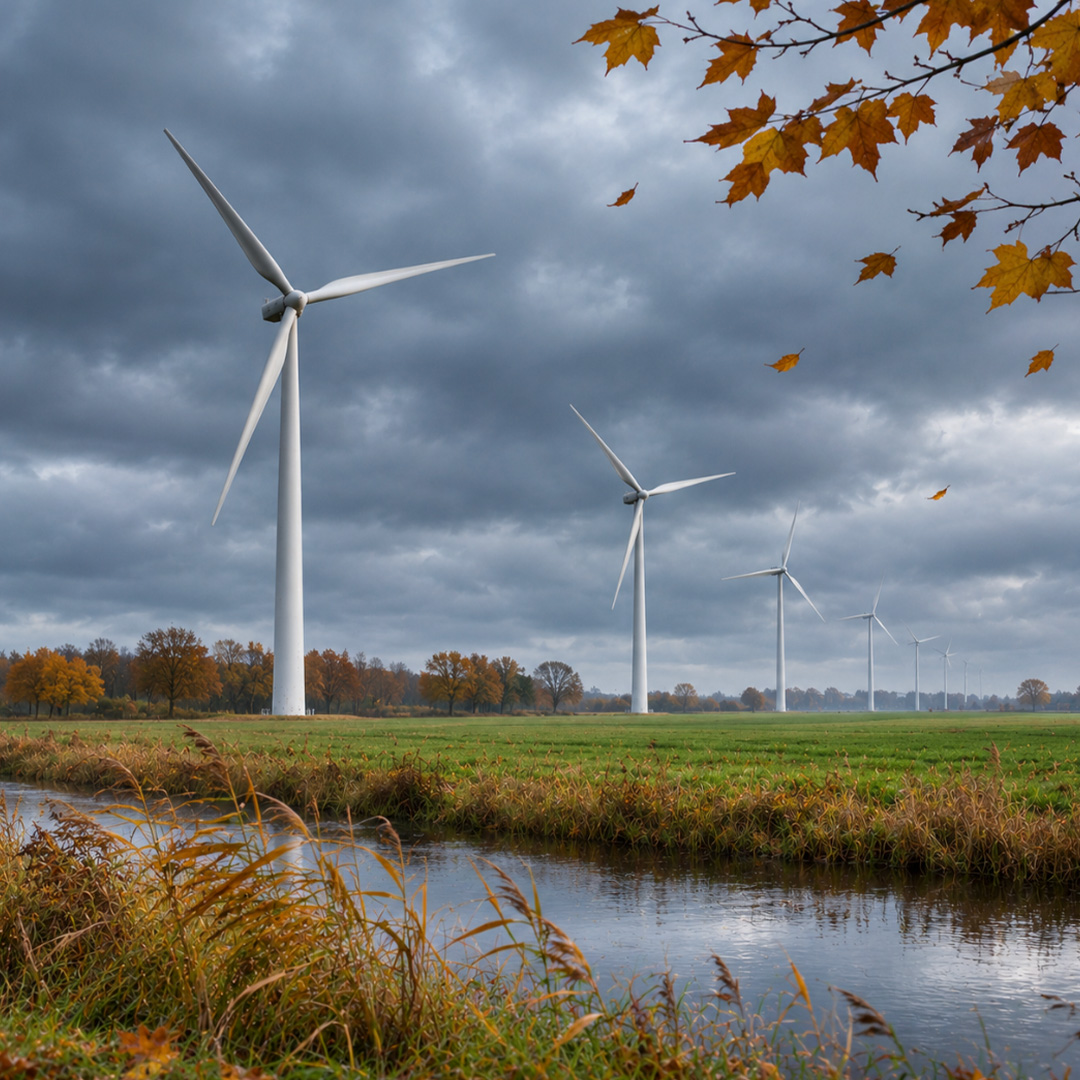
Dutch day-ahead baseload averaged €191.6/MWh, down €58.1/MWh from Week 46. Peakload fell more sharply, dropping €77.3/MWh to €206.9/MWh. The largest week-on-week declines came on Wednesday: baseload cleared at €139.4/MWh and peakload at €155.4/MWh, compared with €309.3/MWh and €379.8/MWh, respectively, the previous Wednesday. Wind explains much of the midweek low and the recovery that followed. On Wednesday 18 November, Dutch wind generation averaged 7.2 GW. By Friday 20 November, wind output had fallen to 1.5 GW, while consumption had edged up from 14.9 to 15.2 GW. A small rise in solar output did little to offset the loss of wind. As a result, Dutch residual load—the demand left after wind and solar generation—rose from 7.0 GW on Wednesday to 12.5 GW on Friday. Germany, Belgium and France also saw residual load rise over the same period.
In the Netherlands, gas-fired plants supplied most of the additional electricity: their average output rose from 3.5 to 8.7 GW. Dutch day-ahead baseload recovered to €213.2/MWh on Friday. Despite that rebound, prices from Monday to Wednesday were well below those on the same days in Week 46, bringing the weekly average down to €191.6/MWh, €58.1/MWh below the previous week’s average.
Gas
TTF day-ahead averaged €86.3/MWh, down €1.7/MWh from Week 46. Prices fell from €91.5/MWh on Monday to a weekly low of €82.1/MWh on Thursday before recovering to €87.6/MWh over the weekend. Northwest European gas demand fell from 785 mcm/d in Week 46 to 734 mcm/d in Week 47. LNG send-out rose from 253 to 276 mcm/d, more than offsetting the fall in Norwegian supply from 306 to 287 mcm/d. Lower demand and higher LNG supply reduced the call on storage from 175 to 102 mcm/d. Regional stocks ended the week 59.6% full, down 1.4 percentage points compared with a 2.7-point decline in Week 46.
Despite higher LNG send-out in Europe, the US–Iran war remained a risk to future deliveries from the Gulf. On Thursday 19 November, vessel-tracking reports suggested that LNG exports through the Strait of Hormuz were slowing after further attacks. On Saturday, Iran’s foreign minister said that reopening the strait depended on Washington accepting Tehran’s conditions. On 24 November, after the reporting week had ended, Qatar called for the restoration of safe passage and the resumption of US–Iran talks. The risk for European buyers is that prolonged restrictions would leave fewer Gulf LNG cargoes available to meet winter demand.
Electricity (€/MWh)
Gas (€/MWh)
Long term
Dutch power forwards also fell, but by far less than spot prices. Dec-26 baseload lost €2.7/MWh to €216.7/MWh, while Dec-26 TTF fell €2.5/MWh to €88.5/MWh. Lower gas and carbon prices improved gas-fired generation margins: the December clean spark spread widened by €4.5/MWh to €18.2/MWh. Further out, Cal-27 baseload fell €1.8/MWh to €146.0/MWh, while TTF lost €1.6/MWh to €70.2/MWh. The Cal-27 clean spark spread improved by €3.7/MWh but remained negative at −€18.6/MWh.
Weekly changes
Base (€/MWh)
Peak (€/MWh)
Gas (€/MWh)
CO2 (€/MWh)
Aanmelden wekelijkse marktrapport
Vul hieronder uw gegevens in en ontvang gratis het wekelijkse marktrapport in uw mailbox.
Want to know more about us?
Contact us via our contact page or find out more about our company on the about us page.